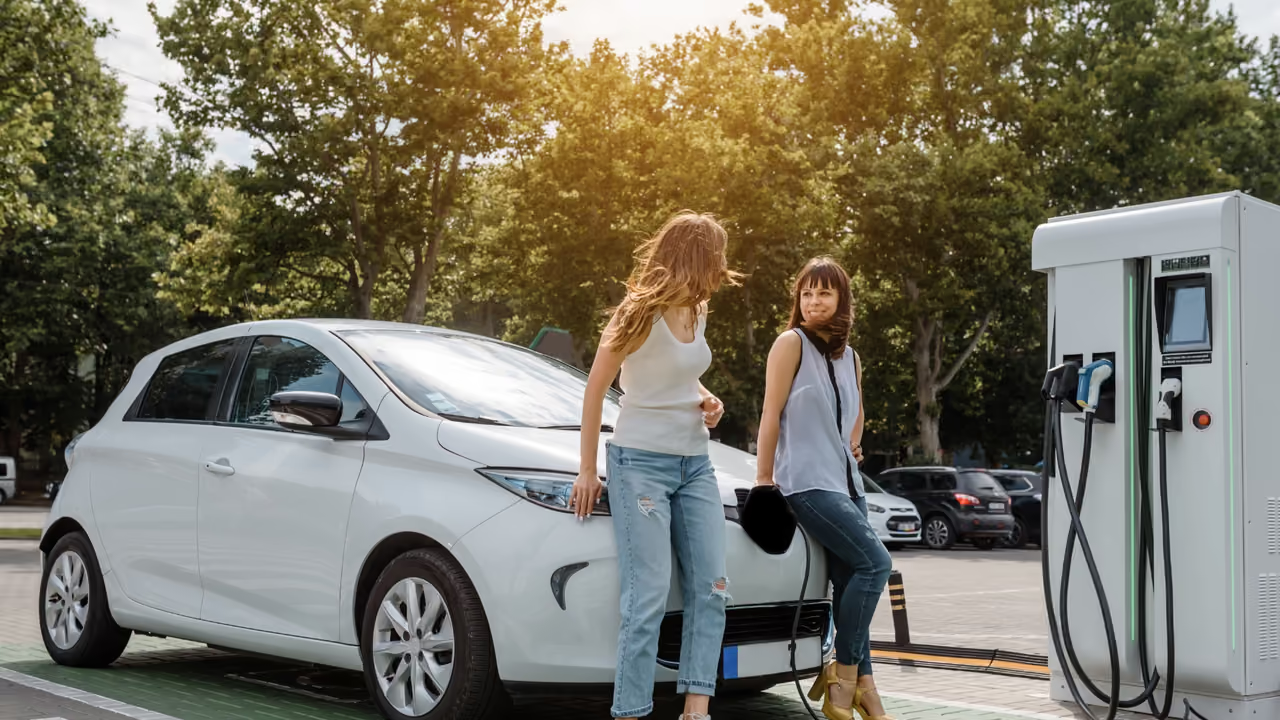
Electric cars have become synonymous with cleaner, greener transportation. They zip silently down streets, emit no tailpipe fumes, and promise a future less dependent on fossil fuels. But focusing solely on their zero-emission driving benefits misses a crucial part of the story: the environmental impact of producing these vehicles. From mining raw materials to manufacturing and battery disposal, electric car production carries its own ecological costs that deserve attention.
Raw Material Sourcing and Its Ecological Footprint
The heart of an electric vehicle (EV) is its battery, typically made from lithium-ion cells. Extracting the key materials—lithium, cobalt, nickel, and manganese—requires mining operations often located in sensitive ecological regions. Lithium, for instance, is primarily harvested from salt flats in arid areas like the Atacama Desert in Chile. While lithium extraction uses less water than many assume, it still strains local water supplies, disrupting ecosystems and communities dependent on scarce resources.
Cobalt mining presents even more serious issues. Much of the world’s cobalt comes from the Democratic Republic of Congo, where mining practices not only degrade the environment but also raise ethical concerns, including child labor and unsafe working conditions. The environmental footprint here includes deforestation, soil erosion, and contamination of local water sources due to heavy metal runoff.
Nickel extraction, necessary for increasing battery energy density, often involves sulfide ore mining, which can lead to acid mine drainage, poisoning waterways and harming aquatic life. Manganese mining, although less controversial, still contributes to habitat destruction and pollution.
Manufacturing Processes and Energy Consumption
Building an electric car is energy-intensive. Compared to internal combustion engine (ICE) vehicles, EV manufacturing generally requires more energy upfront, largely because of the complex battery assembly. This energy often comes from fossil fuel-based power grids, meaning the initial carbon footprint of an EV can be significantly higher than that of a conventional car.
Factories producing batteries and electric drivetrains must operate with precision and use rare materials, which adds complexity and energy demand. The production lines are often situated in countries where renewable energy penetration is low, further increasing the carbon intensity of manufacturing.
On top of that, the production of lightweight materials like aluminum and carbon fiber—used to offset battery weight and improve efficiency—adds another layer of environmental impact. These materials require a lot of electricity and generate greenhouse gases during their processing.
Battery Production and Recycling Challenges
Battery manufacturing is the most scrutinized phase of EV production due to its environmental and social implications. The chemical processes involved emit pollutants and consume significant water and energy. Moreover, the finite availability of critical minerals means that the industry faces the challenge of sustainable sourcing and circular economy practices.
Recycling EV batteries is still in its infancy. While recycling technologies exist, they are not yet widespread or cost-effective. Many spent batteries end up stored or discarded, risking toxic material leakage and resource loss. Efficient recycling could recover valuable metals and reduce the need for new mining, but scaling this up requires investment, regulation, and innovation.
Second-life applications for EV batteries, such as stationary energy storage, offer partial solutions by extending their usefulness, but ultimately, recycling remains essential for minimizing long-term environmental damage.
Comparing Lifecycle Emissions EVs vs Conventional Cars
When evaluating environmental impact, it’s crucial to consider the entire lifecycle of a vehicle—from raw material extraction through manufacturing, use, and disposal.
- Manufacturing Emissions: EVs generally produce more emissions during manufacturing due to battery production and material processing.
- Use Phase Emissions: EVs emit no tailpipe emissions, but their overall carbon footprint depends on the electricity mix. In regions with clean energy, their operational emissions are minimal; in coal-dependent areas, the benefits shrink.
- End-of-Life Emissions: Recycling and disposal practices influence the net environmental impact for both EVs and ICE vehicles, but current EV battery recycling rates are low.
Studies show that despite the higher upfront emissions, EVs typically offset their initial carbon debt within a few years of driving, thanks to zero tailpipe emissions. However, this balance can vary greatly depending on local energy sources and how batteries are handled at the end of their life.
The environmental advantages of EVs are clear, but they come with complex, sometimes hidden, costs. Recognizing these trade-offs is vital for making informed choices about the future of transportation and for pushing the industry toward more sustainable practices at every stage.