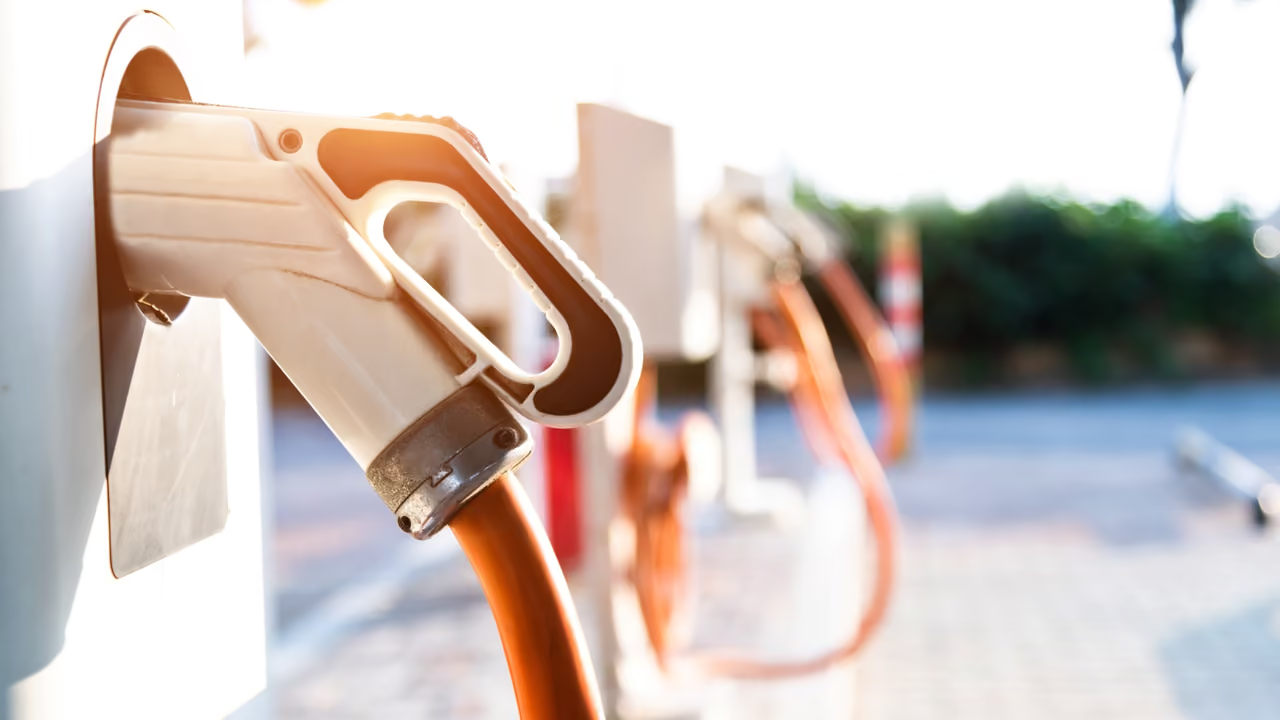
Drive through any major city today and you’ll spot more electric vehicles (EVs) quietly gliding through streets once dominated by the roar of combustion engines. But the revolution in EV adoption is just one part of the story. Equally transformative is how EV charging technology is evolving, shaping not only how we power vehicles but also how we interact with energy systems as a whole. Cost and environmental benefits are well-known drivers, but the future of sustainable transportation hinges on innovations that reshape convenience, infrastructure, and energy management.
Wireless Charging Convenience Meets Innovation
Imagine pulling into your garage, parking your EV, and having it recharge automatically without fumbling with cables. Wireless charging, once a sci-fi notion, is steadily becoming reality. By embedding charging pads into parking spaces and roads, inductive charging technology allows vehicles to recharge simply by parking over or driving slowly across these surfaces.
This hands-off approach not only enhances convenience but also opens doors for new applications. For example, public parking lots could install wireless chargers that top up EV batteries during short stops. Fleet operators can keep vehicles charged throughout the day without manual intervention. Even more ambitiously, embedded chargers in roadways could extend driving ranges by charging cars on the move.
While current wireless systems don’t yet match the efficiency of wired chargers, rapid advancements in power transfer and alignment sensors promise to narrow that gap. Beyond convenience, wireless charging could democratize access to EV charging by overcoming the barrier of installing bulky, cable-dependent stations, especially in urban environments where space is tight.
Ultra-Fast Charging Stations Reducing Wait Times
One of the biggest impediments to widespread EV adoption has been charging time. Unlike filling a gas tank in minutes, traditional EV charging can take hours. Enter ultra-fast charging stations that deliver power at rates previously thought impossible.
These cutting-edge chargers can add hundreds of miles of range in less than 20 minutes, bringing EV fueling closer to the familiar experience of refueling gasoline cars. Companies are pushing to install these ultra-fast stations along highways and urban corridors, making long-distance EV travel more practical and less stressful.
However, ultra-fast charging isn’t just about speed. It demands upgrades to grid infrastructure and energy management to handle intense, short bursts of high power. This drives innovation in battery thermal management to safely absorb rapid charge cycles without degrading longevity.
As ultra-fast chargers proliferate, they will reshape road trip planning, reduce “range anxiety,” and boost consumer confidence, accelerating EV adoption beyond early enthusiasts.
Smart Grid Integration Balancing Energy Demand
EVs don’t exist in isolation; they are part of a broader energy ecosystem. Smart grid integration is a game-changer that connects EV charging with real-time energy supply and demand, creating a more resilient and efficient system.
Smart chargers can communicate with utilities to optimize when and how vehicles draw power. For example, charging can be scheduled during off-peak hours when electricity is cheaper and greener, or reduced during peak demand to avoid straining the grid. This flexibility helps balance fluctuating renewable energy sources like solar and wind, which don’t produce constant power.
Moreover, smart grid integration supports dynamic pricing models and demand response programs, encouraging consumers to charge their EVs in more sustainable ways. These systems also provide valuable data for utilities to plan infrastructure investments and improve overall grid stability.
Smart charging isn’t just about convenience; it’s a critical piece in the puzzle of integrating millions of EVs without overwhelming existing electrical systems.
Vehicle-to-Grid Technology Turning EVs Into Energy Storage
Perhaps the most revolutionary development lies in Vehicle-to-Grid (V2G) technology, which transforms EVs from simple energy consumers into active participants in energy storage and distribution.
V2G allows bidirectional energy flow, meaning an EV can not only charge from the grid but also supply electricity back during times of high demand. This effectively turns parked EVs into distributed energy storage units that can stabilize the grid, provide backup power, or support renewable energy integration.
Imagine thousands of EVs plugged in overnight feeding electricity back to homes or businesses during a heatwave or power outage. This decentralized storage reduces the need for expensive grid upgrades and fossil fuel peaker plants.
While V2G requires sophisticated communication protocols, vehicle battery management, and regulatory frameworks, pilot programs worldwide are already demonstrating its viability. As battery costs decline and EV adoption grows, V2G could become a cornerstone of future energy systems, blurring the lines between transportation and power sectors.