Walking through many cities today, you might notice a subtle but profound shift in the urban landscape. The rise of electric cars is doing more than just changing what buzzes quietly down the street; it’s reshaping how cities are planned and how urban life unfolds. Electric vehicles (EVs) are catalysts for reimagining infrastructure, public spaces, and sustainability goals in ways that extend far beyond their role as a cleaner mode of transport.
Impact of Electric Vehicles on Urban Infrastructure Requirements
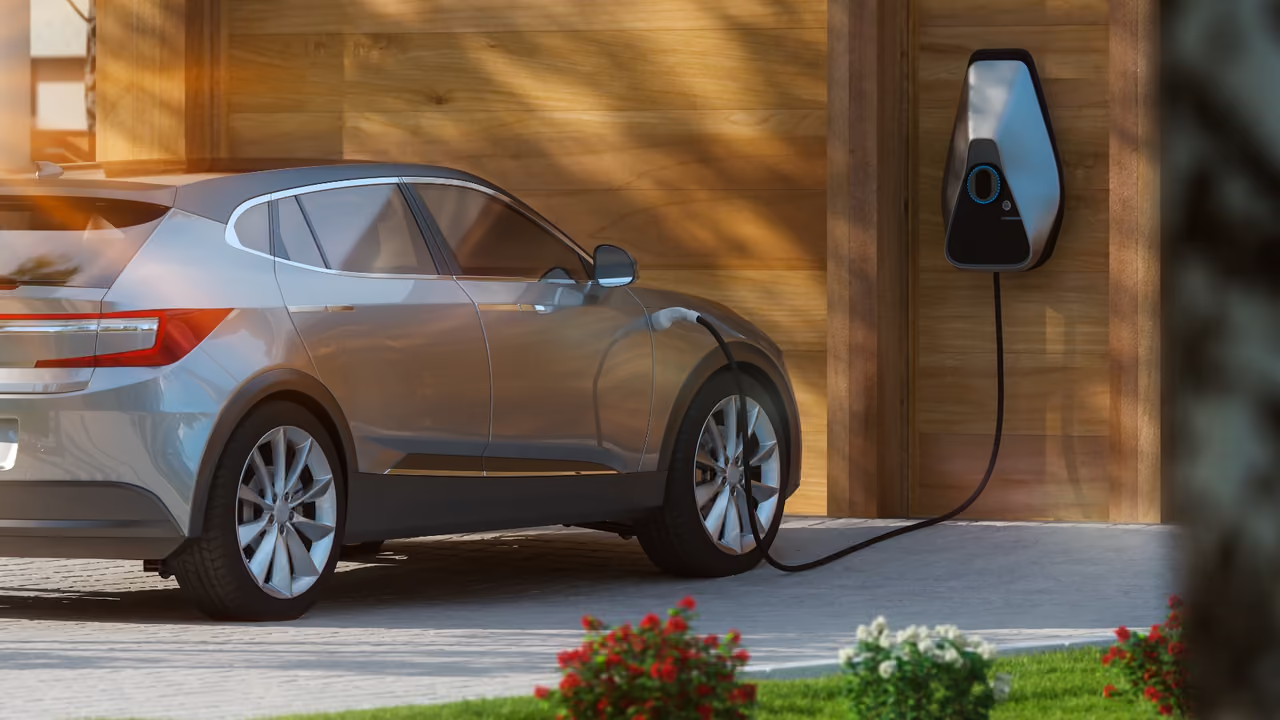
Traditional gasoline-powered cars come with predictable needs: gas stations, exhaust management, and lots of space devoted to their maintenance. Electric cars, by contrast, demand a completely different kind of infrastructure. Instead of gas pumps, cities need widespread access to charging stations, which has profound implications for power grids and urban planning.
Electric vehicles require a robust, reliable electrical grid to support fast and efficient charging, especially in dense urban areas. This means cities must invest in upgrading power distribution networks, incorporating smart grid technology, and ensuring renewable energy sources can meet the rising demand. The switch to EVs pushes planners to think about electricity not just as a utility for homes and businesses, but as the fuel for transportation itself.
Rethinking Parking and Charging Stations in City Centers
Parking lots in city centers have traditionally been designed with gasoline cars in mind. They’re often large, unshaded, and lack the infrastructure to support electric charging. The rise of EVs is challenging this status quo.
First, parking spots need to be redesigned to include charging points. This isn’t just a matter of plugging in a car; it involves installing power outlets, managing cable safety, and sometimes reserving spaces specifically for charging. In some cities, this has led to innovative solutions like solar-powered charging canopies that provide shade and green energy simultaneously.
But the impact goes deeper. Because EVs can charge overnight or during extended parking periods, urban planners are reconsidering the value and use of parking spaces altogether. Some cities are experimenting with dynamic parking pricing and shared charging stations to maximize efficiency. This is nudging urban design toward multi-use spaces that blend transportation needs with community amenities, rather than vast, single-purpose parking lots.
Integration of EVs with Public Transit Systems
The electric revolution isn’t just about private vehicles. It’s increasingly about how EVs can mesh with public transit to create more seamless, sustainable urban mobility. Electric buses and shuttles are becoming common, reducing emissions and noise in city centers.
Moreover, the rise of electric car-sharing and micro-mobility options—like e-scooters and e-bikes—are filling gaps in the public transit network. Cities are integrating these options into trip-planning apps and fare systems, encouraging residents to combine EVs with buses, trains, or trams rather than using private cars for every journey.
This integration has a ripple effect on city planning. Transit hubs need to accommodate EV charging and parking, and land use around these hubs is shifting toward transit-oriented development. This means more mixed-use neighborhoods where housing, work, and leisure are accessible by clean, efficient electric transport modes.
Long-term Urban Sustainability Benefits of Electric Vehicles
Electric cars are more than a green alternative; they’re a tool for creating healthier, more livable cities. By cutting emissions, EVs directly improve air quality, which is a major concern in heavily polluted urban areas. Cleaner air leads to fewer health problems and reduces the strain on healthcare systems.
The reduction in noise pollution is another often overlooked benefit. Electric motors are quieter than internal combustion engines, which helps reduce urban noise levels, making city streets more pleasant for pedestrians and cyclists.
EVs also support the shift toward renewable energy integration in cities. As more electric cars plug into the grid, they can serve as mobile energy storage units, feeding electricity back to the grid during peak demand times in a concept known as vehicle-to-grid (V2G) technology. This makes urban energy systems more resilient and sustainable.
Finally, the infrastructure changes driven by EV adoption encourage a broader rethink of urban space. Less reliance on fossil fuels and traditional parking models opens up opportunities to reclaim streets and lots for green spaces, pedestrian zones, and community areas. These shifts contribute to urban environments that prioritize people over cars, promoting healthier lifestyles and stronger social connections.