Electric Cars and the Changing Landscape of Daily Commutes
It’s hard to miss the growing number of electric cars (EVs) quietly zipping through city streets and highways. Yet, behind this quiet revolution is an equally transformative shift in how drivers recharge these vehicles. Charging infrastructure, once a bottleneck limiting EV adoption, has evolved dramatically. This evolution is reshaping not just where but how people plan their daily commutes.
Evolution of Charging Technologies From Slow to Ultra-Fast
Early electric cars leaned heavily on slow charging options. Plugging in overnight at home was the norm, with typical Level 2 chargers delivering around 7 to 11 kilowatts, filling batteries over several hours. This pace was manageable for many but restrictive for those needing quicker turnarounds. Public charging stations were sparse and often limited to slower chargers, creating range anxiety among drivers.
Fast forward to today, and the scene looks very different. Ultra-fast chargers, often delivering 150 kilowatts or more, are becoming increasingly common. These chargers can juice up an EV battery to 80% capacity in 20 to 30 minutes, a time frame that fits perfectly with a lunch break or a quick coffee stop. Tesla’s Supercharger network and other rapid charging providers have pushed this technology into the mainstream, drastically reducing one of the biggest hurdles to EV use.
Impact of Home and Workplace Charging on Commuter Behavior
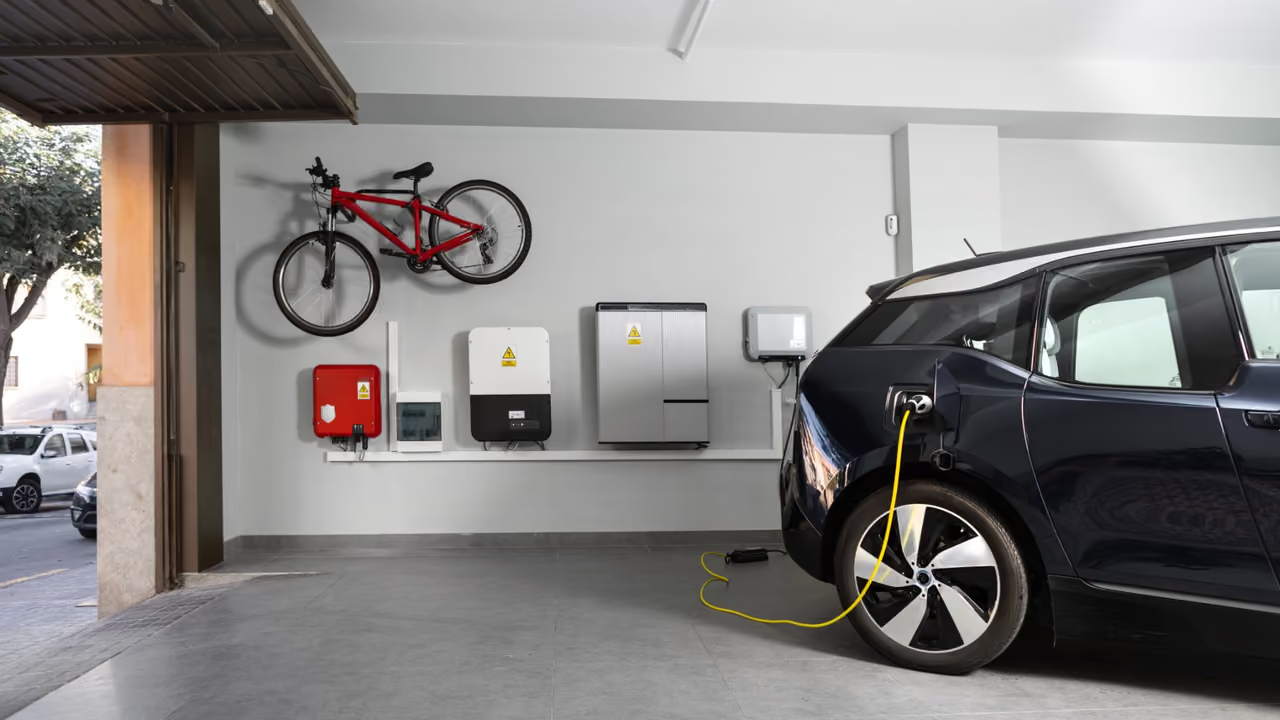
Charging at home remains the backbone of most EV owners’ routines. The convenience of waking up to a full battery cannot be overstated. Installing a dedicated home charging station has become a priority for many, turning garages and driveways into personal energy hubs.
Workplace charging is another game changer. Employers investing in EV charging stations allow employees to plug in during the workday, effectively doubling the hours a vehicle can spend recharging. This accessibility means drivers can confidently choose electric even if their commute is longer or their daily mileage varies widely. It shifts the mindset from “Will I run out of power?” to “Where and when can I top up?”
As a result, daily commuting habits are adapting. Drivers are more willing to cover longer distances or make additional stops, knowing that charging is an integrated part of their day rather than a disruptive chore. The predictability of charging at home and work also reduces the reliance on public stations, easing congestion there while still supporting broader EV use.
Role of Public Charging Networks in Expanding EV Accessibility
Public charging infrastructure remains vital, especially for those without access to home or workplace charging. Urban dwellers in apartments or renters without dedicated parking spots rely heavily on public chargers. The rapid expansion of public networks is therefore a critical factor in democratizing electric mobility.
Modern public chargers are not just faster—they are also smarter. Many are equipped with apps that provide real-time availability, reservation systems, and integrated payment solutions. This ease of use reduces the friction historically associated with public EV charging.
Moreover, governments and private companies are strategically placing chargers along highways and in commercial areas, turning range anxiety into a relic of the past. The visibility of these stations also normalizes EV ownership, encouraging more drivers to make the switch.
Future Prospects Wireless Charging and Charging Integration with Smart Grids
Looking ahead, wireless charging technology promises to further revolutionize EV convenience. Imagine pulling into a parking spot or even stopping at a traffic light, and your car begins charging automatically—no cables, no plugs. Although still in early stages, pilot programs and prototypes suggest this could become a practical reality within the next decade.
Integration with smart grids is another frontier. By syncing EV charging with renewable energy availability and grid demand, cars could charge when electricity is cheapest and cleanest. This not only lowers costs for drivers but also supports broader environmental goals.
Smart grid integration could also enable vehicle-to-grid (V2G) capabilities, where parked EVs feed electricity back to the grid during peak demand periods. This two-way interaction transforms EVs from mere consumers of energy into active participants in energy management, potentially turning daily commuters into contributors to grid stability.